 Photograph loading from this report.
DIVESTMENT
& THE
LIVING WORLD
Military customers. Cloud infrastructure.
Capital, contractors and ecological repair.
BDS solidarity · Community power · Paid ecological care
Contents & scope
Evidence base: the project’s 28 September 2026 public-data snapshot, supplemented by selected primary-source checks on 30 September 2026. The Oakland People's Arms Embargo campaign against FedEx's reported shipments of F-35 parts is active in 2026. The uploaded Palestinian Youth Movement report, Exposing Oakland Airport’s Military Cargo Shipments to Israel, was published 28 August 2025 and is a reference, not this investigation's dataset.
Executive summary
The companies selling artificial intelligence and cloud services do not operate in a weightless economy. Their products depend on land, power, construction, equipment, maintenance, financing and institutional customers. Some relationships with military and defense institutions are documented directly; others remain unproven at the level of a particular facility or workload. The political task is to make those differences legible—not to erase them.
Five findings that can guide action
1. Military relationships are not merely hypothetical. Israel’s government procurement record identifies Google and Amazon Web Services as Nimbus cloud suppliers and includes the Ministry of Defense and IDF among the initiative’s collaborators. Microsoft’s September 2025 statement describes a partial withdrawal of particular services, not the termination of its entire relationship with Israel’s defense institutions. These records justify scrutiny of contracts and institutional dependence; they do not identify every data center processing a military workload.[1, 2]
2. There are named organizations beneath the platform brands. The project snapshot contains 29 facility dossiers, 91 participating entities and 129 facility-related connections. Examples include Southland’s mechanical work at Vantage AZ1, Plan Group’s continuing support at RBC Guelph, CBRE’s technical-operations contract at Hamar, and multiple Electra divisions at Bank Hapoalim’s Rotem facility. This is a selected, uneven research inventory—not a census of the world’s data centers.[3, 4, 5, 6]
3. Infrastructure finance requires separate accounting categories. Crusoe’s $600 million Series D, Brookfield’s $750 million credit facility, and the $15 billion Abilene joint venture describe different financial instruments and scopes. They cannot be added into a reliable estimate of expenditure, nor assigned in full to every named investor.[7, 8, 9]
4. The ecological stakes are material and dated. The IEA estimates that data centers used 415 TWh of electricity in 2024; its 945 TWh figure for 2030 is a projection. UNEP’s September 2025 Gaza assessment documents severe damage to agricultural and ecological systems. Neither number is a measured 2026 total, and neither makes environmental destruction interchangeable across places.[10, 11]
5. Withdrawal needs a democratic destination. This report proposes coupling focused divestment and procurement campaigns with a mandatory ecological levy on AI and data-center activity. It proposes paid land care, public research and community control—not an offset scheme that licenses further military or ecological harm. That policy proposal is distinct from official BDS demands.
How to read the evidence
The unit of analysis is a dated relationship: a procurement award, named construction scope, operations appointment, financing instrument, donor disclosure or movement campaign position. The report preserves the distinctions already built into the project’s evidence ledger. A company’s marketing page can establish what that company says it supplied; it is not independent proof of the performance or consequences of the system.
| Label | What it establishes | What it does not establish |
|---|---|---|
| Official record | A government’s stated procurement, administrative or regulatory action. | All downstream uses; expenditure beyond the disclosed amount. |
| Corporate disclosure | A company’s own stated role, investment or service action. | Independent validation of all claims, impacts or current operating conditions. |
| Research finding | A result within the study’s population, methods and period. | Universal effects or an automatically transferable local outcome. |
| Campaign position | What a named movement asks its supporters or institutions to do. | A court judgment or independent proof of every underlying allegation. |
| Interpretation / proposal | The project’s political analysis or recommended mechanism. | An existing law, implemented fund or endorsed BDS policy. |
Two dates, not one blanket verification claim
The underlying snapshot is dated 28 September 2026. Selected source pages were re-read for this edition on 30 September 2026. The source register marks which entries received that additional check. Other entries retain their snapshot provenance; an inaccessible page is not silently treated as newly verified. Publication dates, historic project periods, and anticipated completion dates are kept separate.
The snapshot contains 331 entities, 474 relationships, 50 financial records and 122 source records. These are inventory counts calculated from the supplied files, not a measure of complicity or research completeness. The facility subset covers 29 named sites in 16 countries. The financial ledger has no valid grand total. Countries are not included merely for alliance membership.
Cloud companies are
institutional suppliers
The strongest starting point is a named customer relationship, rather than the appearance of a familiar corporate logo in a network diagram. Three records illustrate why the wording of an award or a service statement matters.
Project Nimbus: procurement and defense participation
Israel’s Government Procurement Administration identifies Google and Amazon Web Services as the selected cloud providers in Nimbus. Its institutional description includes the Ministry of Defense and the IDF among the project’s collaborators. This provides a primary-source basis for discussing a government cloud initiative with defense participation.[1]
The documented connection is supplier → procurement program → participating institutions. The page is not a register of individual workloads or attacks; those claims require separate records.
Microsoft: a partial restriction is not a complete exit
On 25 September 2025, Microsoft said it had disabled specified cloud-storage and AI services to a unit within Israel’s Ministry of Defense following its review of surveillance allegations. The company also said its cybersecurity work for Israel continued. The report therefore records a dated, partial restriction alongside an ongoing relationship described in that statement—not a claim that all service provision ended.[2]
US frontier-AI awards: ceilings, not payments
The project’s original evidence includes the CDAO announcement of 14 July 2025, recording awards involving Anthropic, Google, OpenAI and xAI, each with a $200 million ceiling. That source could not be fully re-read for this edition, so the entry remains attributed to the existing project snapshot rather than presented as a fresh procurement audit.[12]
| Recorded value | Correct reading | Needed for an expenditure claim |
|---|---|---|
| $200 million per award | Maximum stated award value; not evidence that the full amount was paid. | Award identifier, modifications, obligations and disbursement records. |
| Four award entries | Four named supplier relationships in the July announcement. | Separate lifecycle records; an announcement need not mean all awards began that day. |
Targeted pressure,
not an undifferentiated list
This report supports the Palestinian-led Boycott, Divestment and Sanctions movement. Its stated demands concern ending occupation and colonization and dismantling the Wall; equal rights for Palestinian citizens of Israel; and Palestinian refugees’ return. Its framework is nonviolent and rejects racism, including antisemitism and Islamophobia.[13]
The BDS guide emphasizes focused, strategic pressure. A broad research atlas and a workable campaign list therefore serve different purposes. A dossier can contain hundreds of relationships without instructing an individual to boycott every company in it.[14]
| Campaign instrument | Selected examples in the live guide | How this report uses it |
|---|---|---|
| Consumer-priority targets | Chevron, Intel, Dell, HP, Microsoft, Carrefour, AXA, Reebok, Disney+, Teva, SodaStream and RE/MAX. | A movement-selected focus, not an exhaustive list. Microsoft’s campaign also concerns institutional contracts and investment. |
| Pressure targets | Google and Amazon; Booking, Airbnb and Expedia. | Collective contract pressure and other feasible actions. Not automatically identical to the consumer-priority category. |
| Grassroots boycotts supported by BDS | Examples include McDonald’s, Coca-Cola and Burger King. | Distinguish campaigns supported by the movement from campaigns initiated by it. |
| Institutional divestment and procurement exclusion | Examples include Elbit Systems, Israel Aerospace Industries, Bank Hapoalim, Electra, Netafim, Lockheed Martin and RTX. | Use the separate institutional guidance; research the actual holding or contract before making a claim. |
Campaign categories above are selected examples, not the complete guide. Source: live BNC consumer/pressure and institutional pages read on 30 September 2026. Their content is dynamic; the original page publication label does not date every later addition.[14, 15]
Keep the campaign claim and the evidence claim separate
“BDS lists this company” establishes a movement position. Claims about a supply contract, military use, payment or legal finding need their own evidence. Brand names, subsidiaries and corporate parents may be different legal entities.
This report also includes computing and banking sites with no demonstrated military workload. Their presence in the infrastructure register does not make them official BDS targets.
The infrastructure
beneath the brand
“Who runs this data center?” is not a single question. The landholder, developer, general contractor, electrical installer, operator, cloud service provider and tenant can be different organizations. The arrangement can also change between construction, commissioning and routine service.
Ask for a role, a scope and a date
A building contract may include commissioning without including long-term maintenance. A solar project’s operating agreement may cover the solar equipment rather than the data center. A corporate financing round may support several sites without giving the investor title to any particular building.
In the project atlas, these distinctions appear as different relationship types. The facility register at the back preserves them in ordinary language. The sequence shown here is an analytical checklist, not proof that every site has six separate organizations or a single linear chain.
Two useful comparisons
| Relationship | Example | Why the distinction matters |
|---|---|---|
| Construction scope | Southland describes mechanical, plumbing and fire-protection work at Vantage AZ1.[3] | This is not a claim that Southland sells the cloud service or chooses workloads. |
| Continuing technical support | Plan Group describes round-the-clock support at RBC Guelph.[4] | Operations and maintenance create continuing institutional relationships beyond a build contract. |
Americas: construction
and continuing service
The Americas register spans construction, technical installation and continuing operations. Its value is not a ranking of political responsibility. It shows which specific entities can be researched through project disclosures, contract renewals and institutional records.
Goodyear: owner, builder and technical contractor
Southland’s Vantage AZ1 project page names Vantage as owner and McCarthy as general contractor. Southland describes its own design-build scope in mechanical, plumbing and fire-protection systems. The campus is phased; planned capacity or a later completion date should not be reported as already operating capacity.[3]
Guelph and Toronto: a service relationship versus an expansion
Plan Group’s RBC Guelph account describes three staff and round-the-clock technical support. That is a continuing-service claim. By contrast, Turner’s Serverfarm TOR2.1 account describes a completed expansion: an 8 MW total critical-load design with a 4 MW data-hall buildout within the described work. The smaller construction scope should not be replaced with the larger facility-wide number.[4, 16]
Richland Parish: do not multiply a joint venture
The project snapshot identifies DPR, Turner and Mortenson as construction-joint-venture partners for Meta’s Richland Parish project. Three partner relationships do not establish three separately valued construction awards. The cited contractor page also distinguishes construction beginning in late 2024 from its forecast of operation by 2030; neither a forecast nor a groundbreaking establishes completed capacity.[17]
Brazil and confidential customers
The Brazilian cases name Engemon at Equinix SP3 and Racional at Itaú’s Mogi Mirim campus. These are supplier-described project relationships retained from the snapshot. At the MAZ Mesa project, the snapshot records Rosendin as electrical contractor but does not identify the confidential customer. That missing name is not filled with a guessed hyperscaler.[18, 19, 20]
The ten Americas facilities are listed on page 19. None of these construction records, standing alone, identifies a military computing workload. Where a company has a separately documented military relationship, the two claims must retain separate citations.
Europe: commissioning
is not operations
Commissioning demonstrates that a system was tested or handed over within an agreed scope. Operations demonstrates who runs or services it after that point. Conflating them makes an infrastructure map look more complete than the records actually allow.
Frankfurt and Paris: the scope of Mercury’s delivery
Mercury describes its work at Digital Realty’s FRA17 in Frankfurt and its handover of the Paris Digital Park campus. Its Paris statement, dated 21 October 2025, concerns PAR8–PAR11 with a combined stated capacity of 76 MW. That is a campus-level description, not four independently countable 76 MW sites.[21, 22]
Where a contractor refers to electricity backed by Guarantees of Origin, this report does not translate that statement into proof that every hour of physical power supply was carbon-free. Environmental claims and delivery claims require different supporting records.[22]
Hamar: an expressly named operations contract
CBRE’s 27 February 2024 announcement describes its technical-operations contract for Green Mountain’s Hamar campus, including round-the-clock services. The project’s separate Green Mountain handover source names TikTok as a customer. The operator, technical-services contractor and tenant therefore remain three distinct roles; the report does not infer an undisclosed workload from the tenant’s name.[5, 23]
Rosbach and Groningen: split the technical packages
For FRA7 at Rosbach, the snapshot retains named roles for firstcolo, several SPIE business units and Lupp. For NorthC Groningen, the FireX disclosure differentiates its design, supply and commissioning work from installation by Hamer. A generic offer of maintenance on a supplier’s website is not evidence that the supplier holds the site’s maintenance appointment.[24, 25]
Historical service cases remain historical
The Colt Amsterdam and Roosendaal examples record SPIE’s historical mechanical, electrical and on-site service relationship. They do not certify current ownership or a renewed service contract. The LD10 project remains identified at the level supported by Mercury’s disclosure; the code is not used to guess an owner.[26, 27]
Asia, the Gulf and Israel:
distinct roles
The Asian, Gulf and Israeli dossiers illustrate why a large corporate-group name is not enough. A report must distinguish the joint venture that delivers a building, the firm supplying a specific control system, and the organization responsible for day-to-day service.
Abu Dhabi: EPC delivery and later operational organization
The AUH6 project disclosure names James L Williams Middle East as lead of an engineering, procurement and construction joint venture with McLaren Construction. It also names RED Engineering, BG&E and AESG in design roles. The described first phase is 31.8 MW; the ultimate two-phase 60 MW plan is not presented here as a single completed phase.[28]
Khazna’s February 2026 announcement of NexOps describes bringing operations in-house across its portfolio. This is a portfolio-level statement, not a complete public assignment of every engineer or maintenance package at AUH6. Similarly, a solar operations agreement associated with a campus is not automatically a data-center operations contract.[29, 30]
Sydney: a control system does not equal the entire facility
At NEXTDC S3, Multiplex describes Stage Two construction. The separate Ozuno project account names Heyday5 as electrical contractor and mySmart as systems integrator for the RAPIX lighting-control installation. These are specific packages. Hamer belongs to the Groningen case, not this Sydney project.[31, 32]
Rotem: four Electra divisions and a named bank customer
Electra’s Rotem account identifies Bank Hapoalim as customer and separates Electra Construction, Electra M&E, Electra FK’s backup generators and Electra Elevators. It does not identify a military workload or a present maintenance contractor. Bank Hapoalim and Electra also appear in BDS institutional guidance; that campaign classification is a separate, cited fact.[6, 15]
Elmina: keep two awards separate
The snapshot records Google’s Elmina campus, Sime Darby Property’s development role and Gamuda Engineering’s construction and technical scope. It distinguishes MYR 815 million of construction from MYR 928.6 million of mechanical, electrical and plumbing work. The Gamuda source could not be re-read for this edition; these remain explicitly snapshot-derived award records.[33, 34]
Additional dossiers cover Khazna DXB2, Equinix SG5, Yotta NM1, GASTAT Riyadh and NEXTDC S6. Their named construction and equipment suppliers are listed on page 21; unverified operating roles are not filled in by inference.
Follow the money.
Keep the units.
A large figure is only useful when the reader knows what it measures. The following selected records describe a company-wide equity round, a credit facility, project financing, an acquisition valuation and international investment announcements. They do not share an accounting denominator.
| Record / date | Reported amount and type | Interpretation limit |
|---|---|---|
| Crusoe Series D 12 Dec 2024[7] | US$600m Closed equity round | Round total across participants—not the lead investor’s individual contribution or spending at a single site. |
| Brookfield → Crusoe 11 Jun 2025[8] | US$750m Credit facility | Available financing is not a verified drawn balance. The full amount is not assigned to Abilene. |
| Abilene expanded JV 21 May 2025[9] | US$15bn Project financing envelope | Shared across sponsors and phases; not each sponsor’s contribution or a spent-to-date figure. |
| AirTrunk agreement 4 Sep 2024[35] | Over A$24bn Implied enterprise value | Includes committed-project capital expenditure. Not one investor’s cash payment; announcement and completion are separate events. |
| Microsoft → G42 15 Apr 2024[36] | US$1.5bn Announced minority equity investment | Investment relationship, not a complete inventory of subsequent deployments or military uses. |
| AWS + HUMAIN 13 May 2025[37] | Over US$5bn Announced joint investment plan | A stated plan, not evidence the entire amount had already been spent. |
| Gamuda / Elmina May 2024 snapshot record[33] | MYR 815m construction MYR 928.6m MEP | Separate award scopes. Do not label their sum as cash already paid or convert currencies without a dated method. |
A ledger should preserve uncertainty
The accompanying public-data package retains all 50 financial records with their instrument types, currencies, dates and original caution notes. Some describe proposed arms sales, defense-spending estimates or donor bands rather than infrastructure spending. An export that drops those fields would materially change the meaning of the dataset.
Abilene: one campus,
several kinds of relationship
Abilene is useful because several layers can be named without pretending they are the same transaction. The 2025 joint-venture announcement names Crusoe, Blue Owl Capital and Primary Digital Infrastructure around a planned 1.2 GW campus development. It describes a $15 billion total project-financing envelope—not three $15 billion contributions.[9]
Figure 1. Roles are schematic; line width does not represent money, ownership percentage or traffic. Campus financing, land/power development and cloud use are different relationships.[9, 38, 39]
A facility chain is not an ownership shortcut
The project’s Lancium record concerns land and power development. Its OpenAI source describes early training and inference on Oracle Cloud Infrastructure at Abilene. Neither record is treated as evidence that a customer owns the land, that the full planned campus is operational, or that every future phase has the same ownership and tenant arrangement.[38, 39]
The separate Crusoe Series D disclosure names Founders Fund as lead investor, with other participants including Mubadala and NVIDIA. It concerns the company rather than a proven proportional interest in the Abilene buildings. Brookfield’s credit facility is another company financing relationship, not a reason to draw a $750 million direct-payment line to one site.[7, 8]
Who supports the
policy conversation?
Policy research and infrastructure finance overlap through publicly disclosed support. Those disclosures are legitimate objects of scrutiny. They do not, on their own, establish that a donor dictated a conclusion, selected an author or controlled an institute’s editorial decisions.
CNAS: separate entities and contribution bands
The Center for a New American Security lists supporters for 1 October 2024–30 September 2025. Its disclosure places AWS in the $100,000–249,999 band and Microsoft in the $50,000–99,999 band. Amazon.com is listed separately; it should not be substituted for AWS or used to infer an exact combined payment. CNAS also states a policy of intellectual independence.[40]
ITIF: a threshold, not an exact gift
The Information Technology and Innovation Foundation’s supporters page names Microsoft and Anthropic among supporters above $10,000 in the described past fiscal year. The page does not provide an exact contribution for those companies or a specific allocation to a particular publication. This report preserves that threshold and the page’s period description rather than inventing a precise fiscal year or gift.[41]
| Supported statement | Unsupported leap |
|---|---|
| An institute names a company as a donor within a band or above a threshold. | The company purchased a specific conclusion. |
| The institute publishes on an issue affecting the donor’s business. | The donor directed that paper or all the institute’s work. |
| Donor concentration may be relevant to a governance inquiry. | Every researcher at the institute shares a donor’s interests or intent. |
A useful transparency demand
This report proposes publication-level funding statements, clear conflict-of-interest disclosures, dated donor registers and accessible descriptions of editorial safeguards. When an institution advises on data-center planning, energy demand or public procurement, its methods and assumptions should be independently readable even when its funders favor a particular outcome.
Venture equity, infrastructure debt and institute donations confer different rights. They belong in the same accountability conversation, but not in the same relationship category.
The cloud has
a material footprint
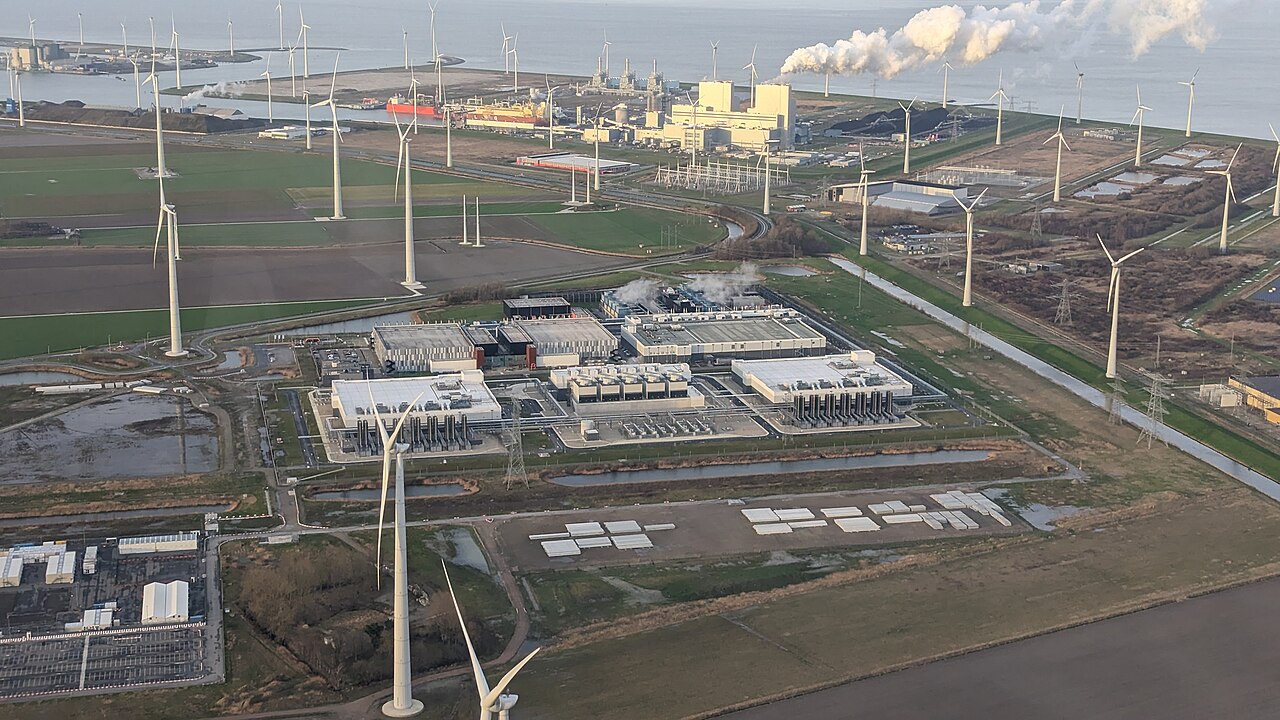 Photograph loading from this report.
Cloud services require electricity, cooling systems, equipment and land. The IEA’s 2025 assessment estimates data-center electricity consumption at 415 TWh in 2024, around 1.5% of global electricity use. Its Base Case projects 945 TWh in 2030. These figures cover data centers overall, not AI alone.[10]
Figure 2. A historical estimate and a scenario projection—not two observed years. Scale begins at zero. Source: IEA, Energy and AI, 2025.[10]
Measure the burden at the place it occurs
A useful facility dossier would add metered electricity, the relevant grid mix, water withdrawals and consumption by season, backup generation, construction impacts and equipment replacement. These are proposed reporting fields; this edition does not supply verified measurements for all 29 sites.
AI may enable efficiency improvements in some activities, but potential savings are not automatic offsets against the infrastructure used to deliver them. The IEA discusses both opportunities and uncertainty. Public planning should test local capacity, demand growth and distributional effects rather than relying only on company-wide “green” branding.[10]
The destruction of land
is not an externality
Environmental accounting cannot separate warfare from the conditions of life it damages. Nor should it make the losses of a displaced or occupied population interchangeable with a corporate carbon target. Climate, water, soil, food and control over land require connected—but distinct—forms of accountability.
Military fuel and the long tail of contamination
Neta C. Crawford’s Brown University study estimates 1.2 billion metric tonnes of US military greenhouse-gas emissions across 2001–2017. This is a cumulative historical estimate, not one year’s emissions or a 2026 footprint.[42]
GAO’s 2025 report states that the Department of Defense estimated more than $9.3 billion in future PFAS investigation and cleanup costs for fiscal 2025 and beyond. This is projected cleanup cost, not an annual appropriation or proof the work has been completed. The GAO page’s later recommendation-status update should not be confused with the physical completion of remediation.[43]
Gaza: agriculture and ecological recovery
UNEP’s 23 September 2025 assessment reported the loss of approximately 97% of tree crops, 95% of shrubland and 82% of annual crops in Gaza since 2023. UNEP also described severe harm to soil, water and food-production systems. The assessment relied on remote sensing and other available evidence; its teams had not been able to enter Gaza. These are dated assessment findings, not a fresh 2026 field survey.[11]
This report’s political position is that recovery must restore people’s ability to live, cultivate and decide the future of their land. A remote planting project cannot substitute for ending destructive practices or compensate for displacement and loss of self-determination.
| Evidence | Boundary to preserve | Practical implication proposed here |
|---|---|---|
| Military emissions estimate | Cumulative, historical, defined institutional scope. | Disclose and reduce military resource demand; do not label it a current annual total. |
| Future contamination costs | Projected costs are not completed remediation. | Track actual cleanup milestones, funding and community oversight. |
| Damage to agricultural land | Dated assessment with access limitations. | Support locally accountable recovery, land rights and safe restoration—not a generic offset. |
Regeneration needs
evidence—and people
 Photograph loading from this report.
Divestment changes financial holdings. A levy raises revenue. Neither automatically creates the land access, practical knowledge or dependable paid work required for ecological repair. The destination of resources therefore needs its own evidence and governance.
A promising result—with a defined scope
The project’s research base includes Reiff and colleagues’ 2024 comparison of nine Central European permaculture farms with paired fields under locally predominant agriculture. It reports 27% higher soil carbon stocks in the permaculture comparison. This is a stock comparison, not an annual removal rate, proof of causation in every setting, or a forecast for all farms. The entry is retained from the project’s prior source review.[44]
Fund the work, not only the headline
The proposed fund would support locally suitable agricultural research, restoration, food production, training and long-term stewardship. Soil measurement, water access, ecological monitoring and maintenance are work. They should appear in budgets as paid roles rather than being assigned indefinitely to volunteers.
A project claiming net carbon removal would need a stated boundary and period, baseline, measurement method, treatment of emissions and uncertainty, and a plan for losses or reversal. Biodiversity gains, food access, heat relief and secure livelihoods deserve separate reporting rather than being reduced to a single carbon number. These are proposed evaluation requirements, not measured results of a fund that already exists.
An ecological levy
with community control
The project proposes a mandatory levy on AI companies and data-center activity, with receipts ring-fenced for community-controlled ecological repair, agricultural research and lasting paid work. No rate, revenue forecast or enacted legal authority is claimed. The mechanism is not an official BDS policy.
 Photograph loading from this report.
Three separate duties
Reduce harm. Binding impact reductions remain necessary; contributions do not authorize unrestricted growth or military activity.
Finance repair. An accountable public mechanism collects and allocates resources. It is not a voluntary corporate charity program.
Share control. Affected communities and workers should have meaningful decision-making power, not only a consultative role.
| Design choice | Proposed safeguard |
|---|---|
| Who pays | Define covered entities, activities, exemptions, cross-border treatment and anti-avoidance rules. Make any intended multiple assessment within corporate groups explicit. |
| What is taxed | Evaluate revenue, resource-use and impact-based options. Publish distributional effects and risks of shifting costs onto workers or essential services. |
| Who decides | Independent public administration; accountable community and worker participation; conflict disclosures and an appeal mechanism. |
| How funds are used | Publish awards, paid roles, land-tenure safeguards, monitoring methods and maintenance obligations. No donor veto and no privately owned “credit” that excuses further harm. |
| How results are checked | Use project-specific baselines and independent review. Publish failures and uncertainty alongside achievements; separate carbon, biodiversity, water and social outcomes. |
Before enactment, the proposal needs jurisdiction-specific tax and public-finance analysis, consultation, enforceable collection rules and an administrative cost model. This report proposes a policy direction; it is not legal or tax advice.
From disclosure
to collective decisions
A network becomes politically useful when it helps people make a decision together. The most actionable unit is often one institution, one contract or holding, one responsible body and one clear demand—not a promise to untangle every global relationship at once.
Build a small evidence packet
Record the institution’s exact relationship; the relevant BDS campaign position; the source for any asserted military or occupation-related role; the contract or holding date; and the requested decision. Mark missing information. Make the packet readable to someone who has not seen the website, and preserve the source links when sharing it.
| Step | A practical output |
|---|---|
| 1 / Connect | Contact a Palestinian-led or allied effort already working on the issue. Agree on an accessible meeting format and a manageable division of work. |
| 2 / Verify | Identify the actual supplier or security held. Save the dated source and distinguish the company’s account from independent research. |
| 3 / Demand | Name the decision-maker and one requested action: disclosure, review, a renewal decision, procurement exclusion or divestment. |
| 4 / Build the alternative | Map practical transition needs, worker protections and essential-service continuity. Keep paid ecological work and community control in view. |
| 5 / Return and correct | Publish the response, record changes and correct errors. Review the campaign guidance and the underlying contract when either changes. |
Conclusion: withdraw support, build capacity
The project’s political position is to divest from US imperial power, military domination and ecological destruction while expanding collective capacity to sustain life. That means focused BDS solidarity, transparent institutional decisions, reduced harmful demand, and a credible destination for resources: land care, food systems, public knowledge, secure livelihoods and democratic control.
Americas
Selected public project disclosures from the 28 September 2026 snapshot. Names are supplied at the role level supported by the record; this is not a list of proven military-processing sites. Additional source checks are marked in the source register.
| Facility / country | Named relationship | Boundary |
|---|---|---|
| Abilene / Lancium campus United States | Crusoe, Blue Owl and Primary Digital Infrastructure: JV sponsors. Lancium: land/power. Oracle / OpenAI: separately recorded cloud infrastructure and use.[9, 39] | Financing, development and use do not establish identical ownership. |
| Digital Realty / Toronto Star conversion Canada | Digital Realty: named client/operator; Plan Group: electrical/technology; EllisDon and HITT: named construction clients.[45, 46] | Historical conversion record; do not merge differently labeled sites without records. |
| Meta / Richland Parish United States | Meta: client; DPR, Turner and Mortenson: construction JV.[17] | One JV, not three separately valued contracts. Future operation is a forecast. |
| Vantage AZ1 / Goodyear United States | Vantage: owner; McCarthy: general contractor; Southland: mechanical, plumbing, fire protection.[3] | Phased project; planned capacity is not all operating capacity. |
| Equinix SP3 Brazil | Equinix: operator; Engemon: turnkey project delivery.[18] | Supplier project account; no military workload established. |
| Itaú / Mogi Mirim Brazil | Itaú: client; Racional: construction.[19] | Historic project scope, not current maintenance certification. |
| MAZ / Mesa United States | Rosendin: electrical contractor.[20] | Customer is confidential; no hyperscaler is guessed. |
| RBC / Guelph Canada | Royal Bank of Canada: computing facility; Plan Group: continuing technical support.[4] | Service disclosure does not assign facility ownership to the contractor. |
| Serverfarm TOR2.1 Canada | Serverfarm: client; Turner: completed expansion.[16] | 8 MW design and 4 MW data-hall buildout are distinct scopes. |
| Yahoo / Lockport United States | Yahoo: historical client; Cupertino Electric: electrical design/construction.[47] | Historic name and project do not establish present owner or contractor. |
The accompanying structured-data register includes all 29 facility records and their original source identifiers. Project-wide gaps and unverified roles should be preserved when these records are reused.
Europe
Selected public project disclosures from the 28 September 2026 snapshot. Names are supplied at the role level supported by the record; this is not a list of proven military-processing sites. Additional source checks are marked in the source register.
| Facility / country | Named relationship | Boundary |
|---|---|---|
| FRA7 / Rosbach Germany | firstcolo: client; SPIE units: delivery, electrical, mechanical, power, IT and commissioning; Lupp: building.[24] | Keep legal business units and technical scopes separate. |
| FRA17 / Fechenheim Germany | Digital Realty: client; Mercury: prime and mechanical/electrical delivery.[21] | Construction completion is not a maintenance award. |
| NorthC Groningen Netherlands | NorthC: operator; Hamer: contractor/installation; FireX: design, supply and commissioning.[25] | Do not infer a maintenance appointment from a services menu. |
| OSL-Hamar Norway | Green Mountain: developer/operator; CTS Nordics: general contractor; CBRE: technical operations; TikTok: named customer.[23, 5] | Customer and service-contractor roles are different. |
| Colt Amsterdam Netherlands | Colt: historical client; SPIE: mechanical/electrical maintenance and on-site services.[26] | Historical service case, not a claim of a current contract. |
| Colt Roosendaal Netherlands | Colt: historical client; SPIE: maintenance and on-site services.[26] | Same source covers two sites; do not duplicate a portfolio contract value. |
| Mentor Graphics / County Clare Ireland | Mentor Graphics: historical client; Winthrop: turnkey and M&E delivery.[48] | Present ownership and service appointments are not established here. |
| Paris Digital Park / PAR8–PAR11 France | Digital Realty: client; Mercury: general, MEP and commissioning.[22] | Combined 76 MW campus statement, not 76 MW per building. |
| SVG-Rennesøy Norway | Green Mountain: operator; Schneider Electric: cooling-system design/infrastructure.[49] | Equipment/system role is not automatically whole-facility operations. |
| LD10 / London project United Kingdom | Mercury: fit-out, MEP and fire protection.[27] | No owner is inferred from the project code. |
The accompanying structured-data register includes all 29 facility records and their original source identifiers. Project-wide gaps and unverified roles should be preserved when these records are reused.
Asia, Gulf & Israel
Selected public project disclosures from the 28 September 2026 snapshot. Names are supplied at the role level supported by the record; this is not a list of proven military-processing sites. Additional source checks are marked in the source register.
| Facility / country | Named relationship | Boundary |
|---|---|---|
| Khazna AUH6 United Arab Emirates | Khazna: client; JLW / McLaren JV: EPC; RED, BG&E and AESG: design. Emerge: separate solar scope.[28, 30] | Phase-one delivery and solar operations do not equal all campus operations. |
| NEXTDC S3 / Sydney Australia | NEXTDC: client; Multiplex: Stage Two; Heyday5: electrical; mySmart: lighting integration; Ozuno: RAPIX.[31, 32] | Technical-control package is narrower than whole-site operations. |
| Rotem / Bank Hapoalim Israel | Bank Hapoalim: client; Electra Construction, M&E, FK and Elevators: distinct packages.[6] | No military workload or current maintenance appointment established. |
| Elmina Business Park 1A Malaysia | Google: campus; Sime Darby Property: developer; Gamuda Engineering: construction, testing and MEP.[33, 34] | Award scopes remain separate; Gamuda source not re-read for this edition. |
| Khazna DXB2 / D3 United Arab Emirates | Khazna: client; Laing O’Rourke Middle East: construction; Assent: steel; GHD: consultant.[50] | Supplier disclosure identifies packages, not workload or ownership shares. |
| Yotta NM1 India | Yotta: operator; India Electricals Syndicate: cable management/grounding; Sterling & Wilson: EPC attribution.[51] | EPC role is attributed through a supplier’s disclosure. |
| Equinix SG5 Singapore | Equinix: operator; Master Construction Works: plumbing and cooling-water transfer.[52] | A defined plumbing package, not the complete contractor roster. |
| GASTAT Riyadh Saudi Arabia | General Authority for Statistics: client; Alfanar: civil, cabling and electromechanical scope.[53] | Government customer does not automatically mean military use. |
| NEXTDC S6 / Sydney Australia | NEXTDC: client; Multiplex: managing contractor for phase one / stage one.[54] | Phase and stage limits must accompany the relationship. |
The accompanying structured-data register includes all 29 facility records and their original source identifiers. Project-wide gaps and unverified roles should be preserved when these records are reused.
Follow the record
Read 30 Sep means the source was additionally read for this edition. Snapshot means it is cited from the project’s earlier record, without a complete new verification. Corporate sources remain corporate accounts. Campaign sources establish movement positions. Links may change after publication.
Israel Government Procurement Administration · Undated / date in title where shown
Read 30 Sep 2026mr.gov.ilMicrosoft / 25 September 2025 · Undated / date in title where shown
Read 30 Sep 2026blogs.microsoft.comSouthland Industries · Undated / date in title where shown
Read 30 Sep 2026southlandind.comPlan Group · Undated / date in title where shown
Read 30 Sep 2026www.plan-group.comElectra Group · Undated / date in title where shown
Read 30 Sep 2026www.electra.co.ilUnited Nations Environment Programme · 2025-09-23
Read 30 Sep 2026www.unep.orgCDAO / 14 July 2025 · Undated / date in title where shown
Snapshot: 28 Sep 2026www.ai.milFollow the record
Read 30 Sep means the source was additionally read for this edition. Snapshot means it is cited from the project’s earlier record, without a complete new verification. Corporate sources remain corporate accounts. Campaign sources establish movement positions. Links may change after publication.
Palestinian BDS National Committee · Undated / date in title where shown
Read 30 Sep 2026bdsmovement.netPalestinian BDS National Committee · Undated / date in title where shown
Read 30 Sep 2026bdsmovement.netPalestinian BDS National Committee · Undated / date in title where shown
Read 30 Sep 2026bdsmovement.netTurner Construction Company · Undated / date in title where shown
Read 30 Sep 2026www.turnerconstruction.comDPR Construction · Undated / date in title where shown
Snapshot: 28 Sep 2026www.dpr.comEngemon · Undated / date in title where shown
Snapshot: 28 Sep 2026engemon.com.brRacional Engenharia · Undated / date in title where shown
Snapshot: 28 Sep 2026racional.comRosendin · Undated / date in title where shown
Snapshot: 28 Sep 2026www.rosendin.comMercury · 2023-06-23
Read 30 Sep 2026www.mercuryeng.comMercury · 2025-10-21
Read 30 Sep 2026www.mercuryeng.comGreen Mountain · 2023-11-30
Snapshot: 28 Sep 2026greenmountain.noSPIE · 2026-06-30
Snapshot: 28 Sep 2026www.spie.comFollow the record
Read 30 Sep means the source was additionally read for this edition. Snapshot means it is cited from the project’s earlier record, without a complete new verification. Corporate sources remain corporate accounts. Campaign sources establish movement positions. Links may change after publication.
FireX · Undated / date in title where shown
Snapshot: 28 Sep 2026www.firex.nlSPIE Netherlands · Undated / date in title where shown
Snapshot: 28 Sep 2026www.spie-nl.comMercury · Undated / date in title where shown
Snapshot: 28 Sep 2026www.mercuryeng.comJames L. Williams Middle East · Undated / date in title where shown
Read 30 Sep 2026jlwme.comKhazna Data Centers · 2026-02-09
Read 30 Sep 2026khaznadatacenters.comMultiplex · 2023-06-14
Read 30 Sep 2026www.multiplex.globalGamuda Berhad · 2024-05-24
Snapshot: 28 Sep 2026gamuda.comSime Darby Property · 2026-04-13
Snapshot: 28 Sep 2026www.simedarbyproperty.comBlackstone · 2024-09-04
Read 30 Sep 2026www.blackstone.comMicrosoft · 2024-04-15
Read 30 Sep 2026blogs.microsoft.comFollow the record
Read 30 Sep means the source was additionally read for this edition. Snapshot means it is cited from the project’s earlier record, without a complete new verification. Corporate sources remain corporate accounts. Campaign sources establish movement positions. Links may change after publication.
Amazon / AWS · 2025-05-13
Read 30 Sep 2026press.aboutamazon.comLancium · 2026-07-15
Snapshot: 28 Sep 2026lancium.comCNAS · Undated / date in title where shown
Read 30 Sep 2026www.cnas.orgNeta C. Crawford / Brown / 2019 · Undated / date in title where shown
Read 30 Sep 2026costsofwar.watson.brown.eduUS Government Accountability Office · 2025-02
Read 30 Sep 2026www.gao.govReiff et al. / 2024 · Undated / date in title where shown
Snapshot: 28 Sep 2026www.nature.comPlan Group · Undated / date in title where shown
Snapshot: 28 Sep 2026www.plan-group.comEllisDon · Undated / date in title where shown
Snapshot: 28 Sep 2026www.ellisdon.comCupertino Electric · Undated / date in title where shown
Snapshot: 28 Sep 2026www.cei.comWinthrop Technologies · Undated / date in title where shown
Snapshot: 28 Sep 2026winthrop.ieFollow the record
Read 30 Sep means the source was additionally read for this edition. Snapshot means it is cited from the project’s earlier record, without a complete new verification. Corporate sources remain corporate accounts. Campaign sources establish movement positions. Links may change after publication.
Schneider Electric · 2015-10-01
Snapshot: 28 Sep 2026blog.se.comAssent Steel · Undated / date in title where shown
Snapshot: 28 Sep 2026www.assentsteel.comIndia Electricals Syndicate · Undated / date in title where shown
Snapshot: 28 Sep 2026indiaelectricals.netMaster Construction Works · Undated / date in title where shown
Snapshot: 28 Sep 2026mastergroup.sgAlfanar Projects · Undated / date in title where shown
Snapshot: 28 Sep 2026alfanarprojects.comMultiplex · Undated / date in title where shown
Snapshot: 28 Sep 2026www.multiplex.globalPhoto register & colophon
All four photographs are real, independently published images with Creative Commons permissions verified on their Wikimedia Commons file pages on 30 September 2026. No image from the Oakland reference report has been copied. Photographs supply visual context, not evidence of a contract, military workload, carbon result or current facility condition.
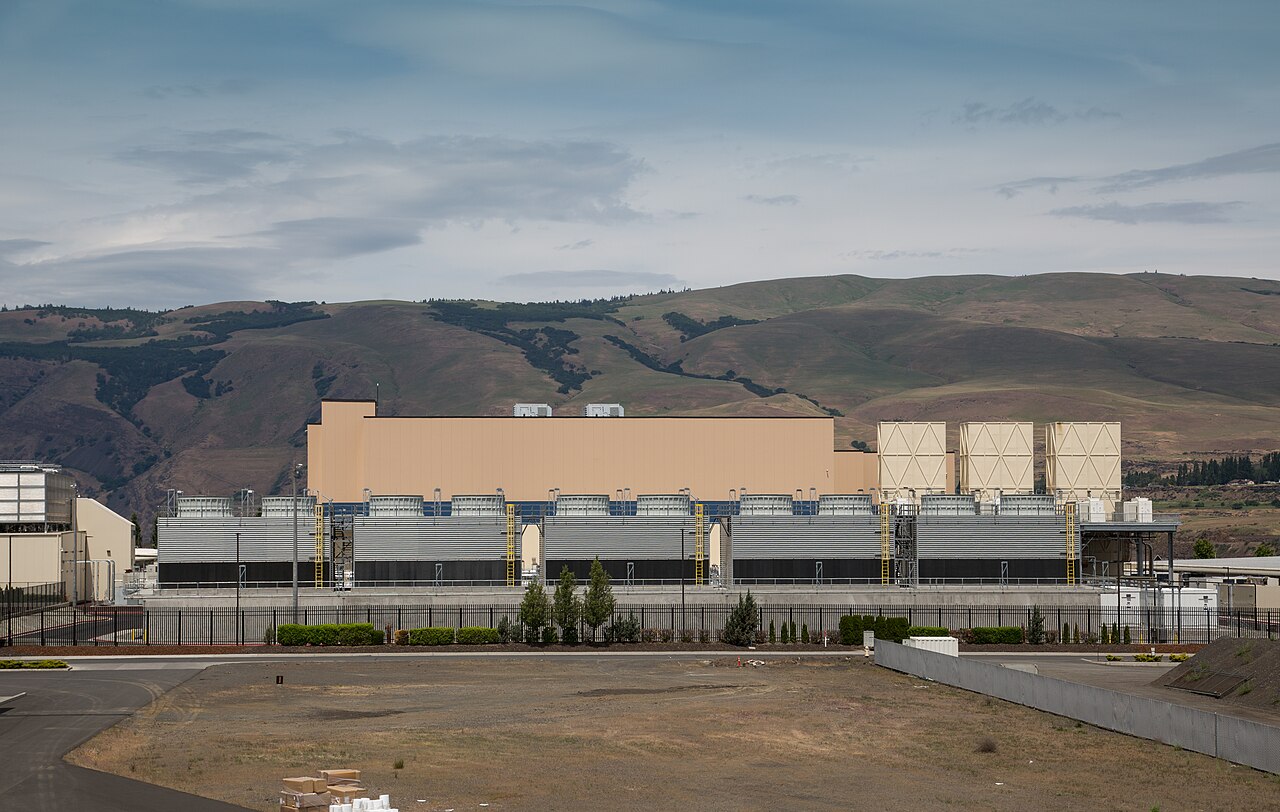
Google Data Center — The Dalles, Oregon
Tony Webster · 17 May 2015
Original file page and attribution record · CC BY 2.0
Cropped to a panoramic frame in the cover layout; resized. No generative alteration.
Google data center and wind turbines in Eemshaven
Wvdp · 6 January 2023
Original file page and attribution record · CC0 1.0
Cropped to a panoramic frame; resized. No generative alteration.
Hayes Valley Farm — fava hillside
Zoey Kroll · 21 March 2010
Original file page and attribution record · CC BY-SA 3.0
Cropped to a panoramic frame; resized. The photographic adaptation retains CC BY-SA 3.0. No generative alteration.
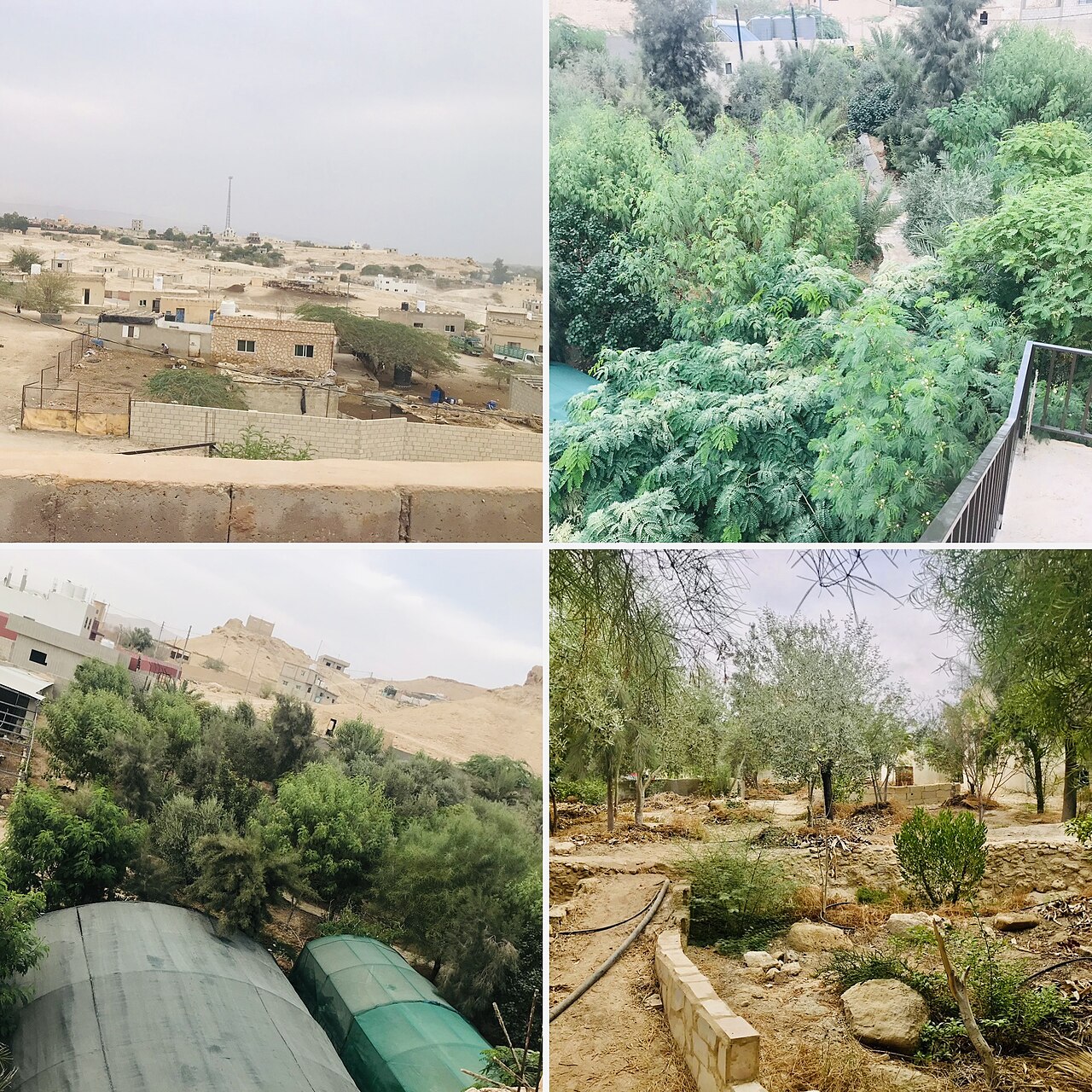
Greening the Desert II site, Dead Sea Valley, Jordan
Jengod · Capture date not established; uploaded 27 April 2023. The filename contains “2018”.
Original file page and attribution record · CC BY-SA 4.0
Resized without cropping the montage. Any photographic adaptation retains CC BY-SA 4.0. No generative alteration.
Reuse, access and privacy
Retain the image credits, source links, license links and modification notices. Photographic adaptations marked ShareAlike retain their stated license; no photographer endorses this report. CC0 is a public-domain dedication, not an attribution license. Third-party text and trademarks retain their own rights; this report does not relicense the project’s older source materials.
This edition includes local copies of all four photographs. Reading and printing the report require no external image requests, analytics, scripts or fonts. Source and license links require internet access when selected. Use the print control only after all photos have loaded.
The accompanying package includes editable HTML, local photographs, the original public-data snapshot fields used for the research registers, a photo manifest and an optional preparation script. It does not contain credentials or the Oakland report.